The No-Show Problem Is a Reminder Problem
No-shows usually come from a broken reminder sequence, not a missing deposit. Here's the order to fix them in, and why easy rescheduling helps.
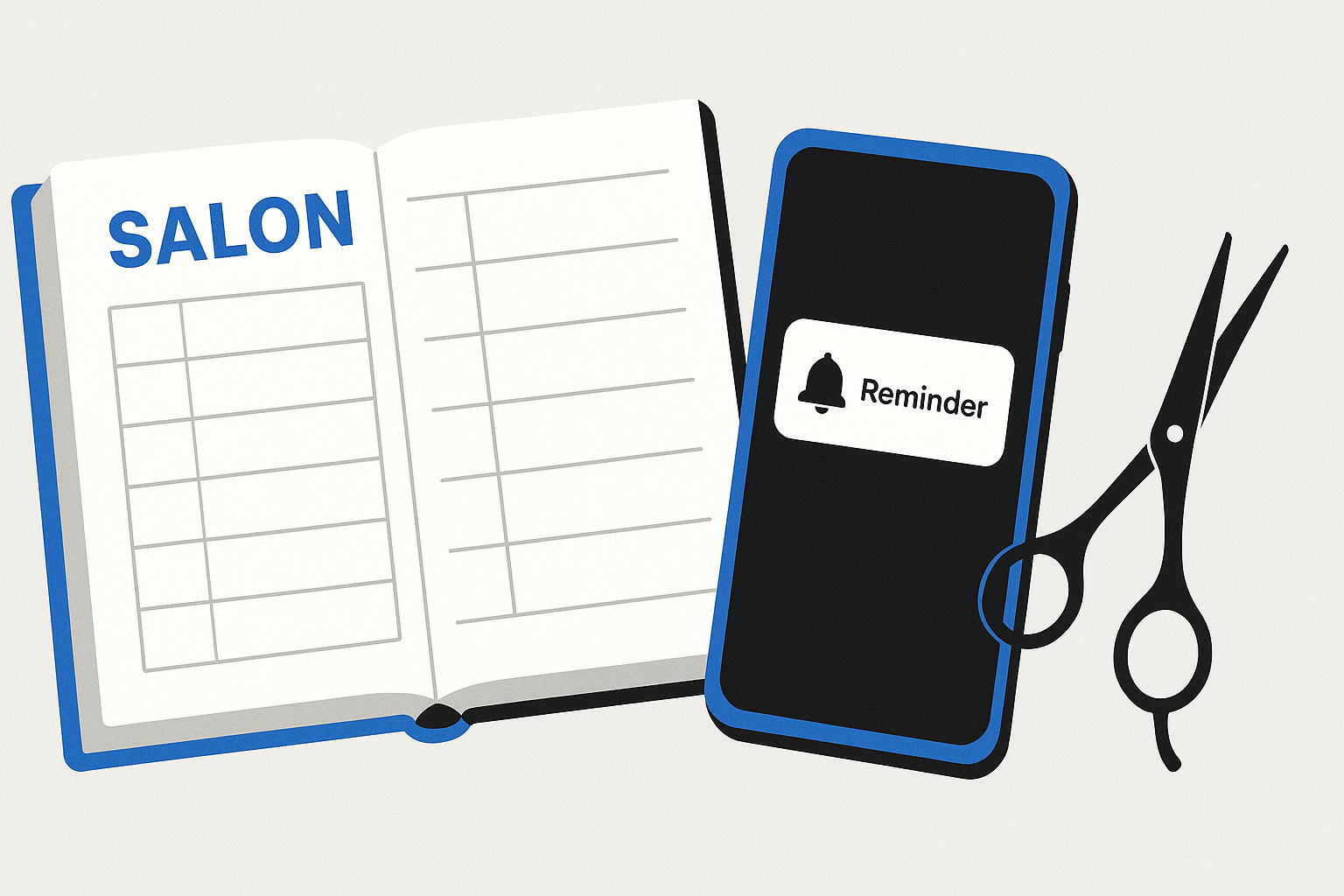
A 2pm colour appointment doesn't show. The chair sits empty for two hours. You already turned down two people who wanted that slot, and the stylist who blocked the afternoon is now scrolling her phone in the back.
The first instinct is almost always the same: start taking deposits. Make them put money down and they'll show up.
That works, sort of. It also costs you bookings from people who would have shown up anyway. Before you charge anyone, it's worth checking whether the person who ghosted you ever got a proper reminder — and whether, when their day fell apart at noon, you gave them any way to move the appointment other than silence.
Most no-shows aren't defiance. They're forgetting, or they're avoidance. Reminders fix the forgetting. Easy rescheduling fixes the avoidance. Deposits are for the small group left over, and you should know what they cost before you reach for them.
The sequence, in order
There are four touchpoints between booking and appointment. Most businesses have one, maybe two, and then wonder why people vanish.
1. Confirmation at the moment of booking. The instant someone books — on the phone, on your site, through your booking page — they get something in writing. Date, time, service, how long it takes, address, and what happens if they need to change it. This is not a courtesy. It's the thing they will search their inbox for on Thursday morning when they can't remember whether it's 10 or 11.
If you take bookings by phone and the only record is your paper book, the customer has nothing. They wrote "hair — Thursday?" on a sticky note and lost it. That's a no-show you created.
2. A reminder the day before. This is the one that does the heavy lifting. The day before is when someone still has time to rearrange things. They can move the school pickup, tell their boss they're taking a long lunch, or — importantly — tell you they can't make it, while you still have a day to fill the slot.
Send it in the afternoon or early evening. Morning reminders for tomorrow get read at 8am, half-processed, and forgotten by lunch.
3. A short one the morning of. Different job. This one isn't asking them to plan, it's catching the person whose day has already gone sideways. Keep it to the essentials: time, place, one tap to confirm or change. Two lines.
4. An easy way out. Every message includes a way to move the appointment that takes less effort than ignoring you. More on why this matters below, because it's the part people resist.
Notice what isn't in this list: five messages. There's a point where reminders start feeling like nagging and people mute you, which means they also mute the reminder that mattered. Three touchpoints with clear information beat six vague ones.
Why making it easy to cancel reduces no-shows
This is the part that feels wrong. If you put a "reschedule" button in front of someone, surely more people use it, and surely that's worse.
Think about what actually happens in a customer's head at 11am when they realise they can't make their 2pm.
Option A: call the salon. Someone might pick up, someone might not. They'll have to explain. There might be a pause, or a sigh, or a question they don't want to answer. It feels like getting in trouble. So they put it off until 1:45, by which point calling feels worse than not calling — and then they just don't.
Option B: tap a link, pick Thursday at 3, done. Eight seconds, no conversation, no guilt.
The friction in Option A doesn't make people show up. It makes them disappear. Every awkward cancellation policy is quietly manufacturing no-shows, because avoidance is easier than confrontation for most people most of the time.
When you make rescheduling genuinely easy, three things happen. Your cancellation number goes up. Your no-show number goes down by more. And critically, cancellations arrive earlier — a Tuesday morning cancellation for a Wednesday slot is a slot you can still sell. A 2pm no-show is a hole in the day.
You are not trying to get the cancellation rate to zero. You are trying to convert silent no-shows into early, fillable cancellations, and convert as many of those as possible into a rebooked appointment. A customer who moves to Thursday is still your customer. A customer who ghosted you is embarrassed and may never come back, which is the hidden cost nobody puts on the whiteboard.
Where the phone still matters
Plenty of your bookings come in by voice, especially from older clients and anyone calling while driving. That's fine — but a phone booking still needs to generate a written confirmation, or it starts the sequence with nothing.
The practical problem is that the phone rings when you're mid-service. You can't stop a colour or a trim to take a booking, so the call goes to voicemail, and most people don't leave one. We wrote about that gap in the five minutes after a missed call — it's the same mechanism, just at the front end instead of the reminder end.
This is where an AI phone agent earns its keep for appointment businesses. It answers when you can't, takes the booking, and — because it's software — automatically sends the confirmation text and puts the reminder sequence in motion. No sticky note. If you run a salon, spa, clinic or studio, our beauty and wellness page walks through how booking, reminders and the phone fit together for that kind of shop specifically.
Write reminders people actually read
A reminder that gets ignored is the same as no reminder. A few things that make the difference:
- Lead with the time and date. Not "Hi! We're so excited to see you." People read the first six words of a text. Make them count.
- Name the service. "Balayage, 2 hours" prevents the person who thought they'd booked a trim from being surprised and rescheduling on the spot.
- Include the address. Every time. New clients get lost, and lost clients arrive late or not at all.
- One action, one link. "Reply C to confirm, or tap here to move it." Two choices, both easy.
- Sound like your business. A reminder that reads like a bank notification gets filed as spam in the reader's head.
- Say the policy plainly, once. If you need 24 hours' notice, say "24 hours' notice to change, no charge" in the day-before message. Not a paragraph of terms.
If you have regulars who always show, you can lighten the sequence for them. The people who need all three touchpoints are new clients and anyone booking more than two weeks out.
Then, and only then, deposits
Run the full sequence for a month or two. Watch what's left.
If you still have a persistent no-show rate on a specific type of booking, that's where a deposit belongs. Usually it's the long, expensive, hard-to-refill services: extensions, a three-hour colour correction, a first-time consult that blocks a specialist's afternoon. A deposit on a 20-minute trim isn't protecting much and is annoying to administer.
Here's the part vendors skip. Deposits don't cost the no-shows anything — they've already decided. Deposits cost you the hesitant bookers. The new client comparing three salons who isn't ready to hand a card to a business she hasn't visited. The person booking at 11pm who won't finish a payment form on a phone. The customer who'd have come in twice a year and now just doesn't start.
You are trading some new bookings for some protected slots. Sometimes that trade is clearly worth it. On a four-hour service, absolutely. Across your whole book, usually not.
A softer version works for a lot of shops: card on file, no charge, with a clearly stated fee for no-shows and late cancellations under 24 hours. It's less friction at the booking moment and it still changes behaviour, because people know you have their card. Whether you actually charge the fee is your call — many owners never do, and it still works, because the deterrent is the possibility.
The order matters more than any single tactic
Confirmation, day-before reminder, morning-of reminder, easy reschedule. Then look at what's left and decide whether it justifies a deposit on specific services.
Doing it in that order means you fix the cheap, invisible problem first — people who genuinely forgot, and people who were too embarrassed to call — before you start charging the people who would have shown up.
Most owners do it backwards, add a deposit policy, watch new bookings drop, and conclude that customers are unreliable. They aren't. They're just busy, and nobody reminded them.