A Restaurant Website in Toronto That Takes Its Own Orders
How a restaurant website, online ordering, and an AI phone agent work together in Toronto — and what actually changes on a Friday night.
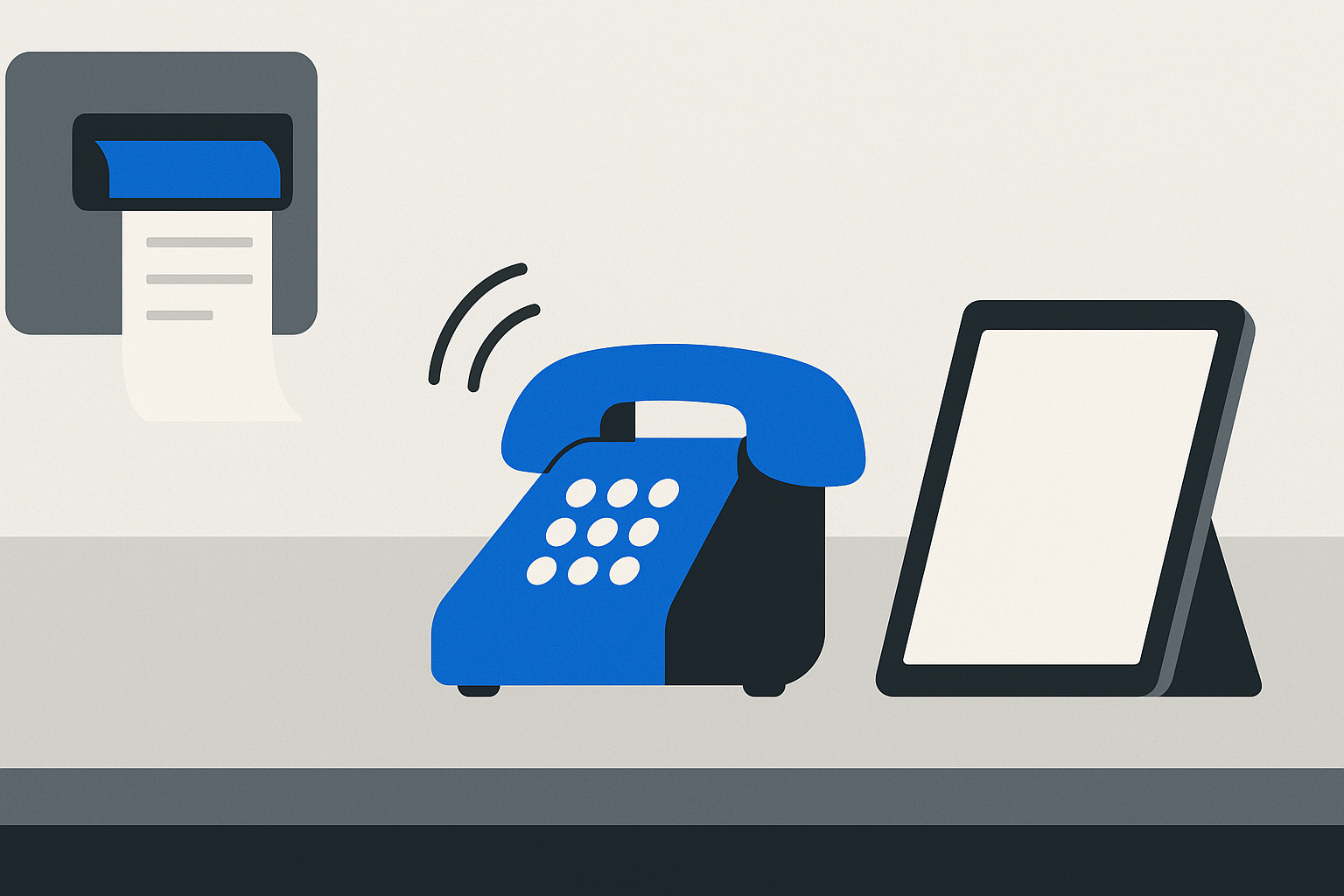
It's 7:40 on a Friday. Two servers are in the weeds, the pass is backed up, and the phone has rung four times in the last ten minutes. Somebody grabs it on the third ring, says "can you hold," and then forgets. Meanwhile the tablet on the shelf keeps chirping with orders that cost you a cut of every dollar.
That's the whole problem in one scene. You already know it. What's less obvious is that the three fixes people usually shop for separately — a website, an online ordering system, and something to answer the phone — are really one system, and they only pay off when they're wired together.
Here's how the pieces connect, and what the Friday actually looks like after.
Piece one: the site is the place orders land
Most independent restaurants in Toronto have a website that acts like a brochure. Photos, an address, a PDF menu from 2019, maybe a link out to a delivery app. It's a signpost pointing somewhere else.
The only job that matters is this: when someone lands on your site — from a Google search, from your Instagram bio, from your Google Business Profile — they can order in under a minute without leaving.
What that requires is boring and specific:
- The menu is real text on the page, not a PDF and not a photo of a menu. Google can't read your PDF properly and neither can a phone screen.
- Hours, address, and phone number are correct and match your Google listing exactly.
- The "Order" button is visible without scrolling, on a phone, in the first second.
- The page loads fast on a five-year-old Android on a Bloor streetcar.
None of that is design work. It's plumbing. If you're weighing whether you need something custom or whether a template will carry you, we wrote about that trade-off in template vs custom — for most restaurants the answer is less exciting than vendors want it to be.
Piece two: ordering you own
Direct online ordering means the customer pays you, the order prints in your kitchen, and you keep the customer's name, phone number, and order history.
The delivery apps are useful for discovery. A tourist in the Entertainment District who has never heard of you will find you there. That's a real service and it's worth paying for. The problem is the regular who has eaten your food twenty times and still orders through an app because it's the only route you've made easy. You're paying a finder's fee for a customer you already found. We broke down the full cost of that in why delivery app orders cost more than you think.
Do this math with your own numbers, not anyone else's:
- Pull last month's app statement. Write down gross sales and total commission and fees.
- Estimate what share of those orders came from repeat customers — the same addresses, the same names. Most owners can eyeball this within ten percent.
- Multiply that share by the commission. That's the number a direct ordering channel is competing for.
If that number is smaller than the monthly cost of running direct ordering, don't do it. Genuinely. Some small rooms aren't there yet. But most places that do more than a handful of takeout orders a day find the number is not small, and it repeats every month forever.
The practical shift is not "leave the apps." It's "give your regulars a reason to switch." An insert in every takeout bag. A sign at the counter. Pickup that's a dollar or two cheaper direct. The apps keep doing discovery; you keep the people who already like you.
Piece three: the phone that answers itself
The phone is the part everybody has given up on. You can't staff it during a rush, voicemail doesn't work because nobody leaves one, and a ringing phone in a full room is a tax on every person working.
An AI phone agent picks up on the first ring, every time, including when all four lines go at once. It's not a robot reading a menu tree. It's a voice that answers the questions you actually get:
- Are you open right now?
- How long for a table of six?
- Do you have parking?
- Is the pad thai gluten free?
- I want to place a pickup order.
It takes the order, reads it back, sends it to your kitchen the same way an online order arrives, and texts the customer a confirmation. When something is genuinely outside its lane — a catering quote, a complaint, a large party — it takes a message with a callback number and sends it to your phone as a text you can actually read later.
The piece owners underestimate: it also handles the calls at 2pm on a Tuesday, and at 11:15 when you've closed the kitchen but the line is still ringing. We've written more about what to do with the phone during the rush if you want the staffing side of this.
What actually changes on a Friday
Same 7:40pm. Four calls come in during those ten minutes.
Two of them are "are you open / how late." The agent answers them in fifteen seconds each. Nobody on your floor knows they happened.
One is a pickup order. The agent takes it, it prints at the pass with the rest, the customer gets a text saying twenty-five minutes. Your host never looks up.
One is a party of eight asking about next Saturday. The agent takes the name and number and texts it to you. You call back at 10pm when the room has thinned out, and you book it — which is the whole argument in the five minutes after a missed call, just shifted to a time you can actually act.
Meanwhile the tablet is quieter, because three of tonight's takeout orders came through your own site from people who used to order on an app and now have your ordering page saved.
Nothing dramatic happened. That's the point. The rush got less loud, and a few percent of the night's revenue stopped leaking.
Why the three only work together
A website without ordering is a brochure. Ordering without a site that ranks is a link nobody finds. A phone agent that can't push an order into the same kitchen queue as everything else just creates a second pile of tickets, which is worse than what you had.
Wired together, one thing feeds the next. Someone searches "thai restaurant Danforth" on their phone. Your Google listing shows up with correct hours. They tap through to a page that loads instantly and shows a real menu. They order direct, or they call and the agent handles it. Either way the ticket lands in one place, and their phone number ends up in your list instead of an app's.
How to sequence it without blowing up your month
Don't do all three at once in December. Order of operations that works:
- Fix the Google listing first. It's free, it takes an afternoon, and it's where most of your searches actually end.
- Get the site and direct ordering live together. Separately is wasted work. Give it two or three weeks of normal service before you judge it.
- Add the phone agent last, once your ordering flow is stable — because the agent should be putting orders into a system that already works, not inventing one.
- Then push your regulars over. Bag inserts, counter signs, a line on the receipt. This is the step people skip, and it's the one that moves the commission number.
If you want to see how these pieces fit for a specific kind of room — counter service, full service, a place doing mostly pickup — that's laid out on our restaurants page.
We run a restaurant too. The reason we built this stack is that we needed it on our own Fridays.