How to Hire a Restaurant Web Designer in Toronto
How to tell a web designer who has built for restaurants from one who hasn't — the questions to ask, and when a generalist is fine.
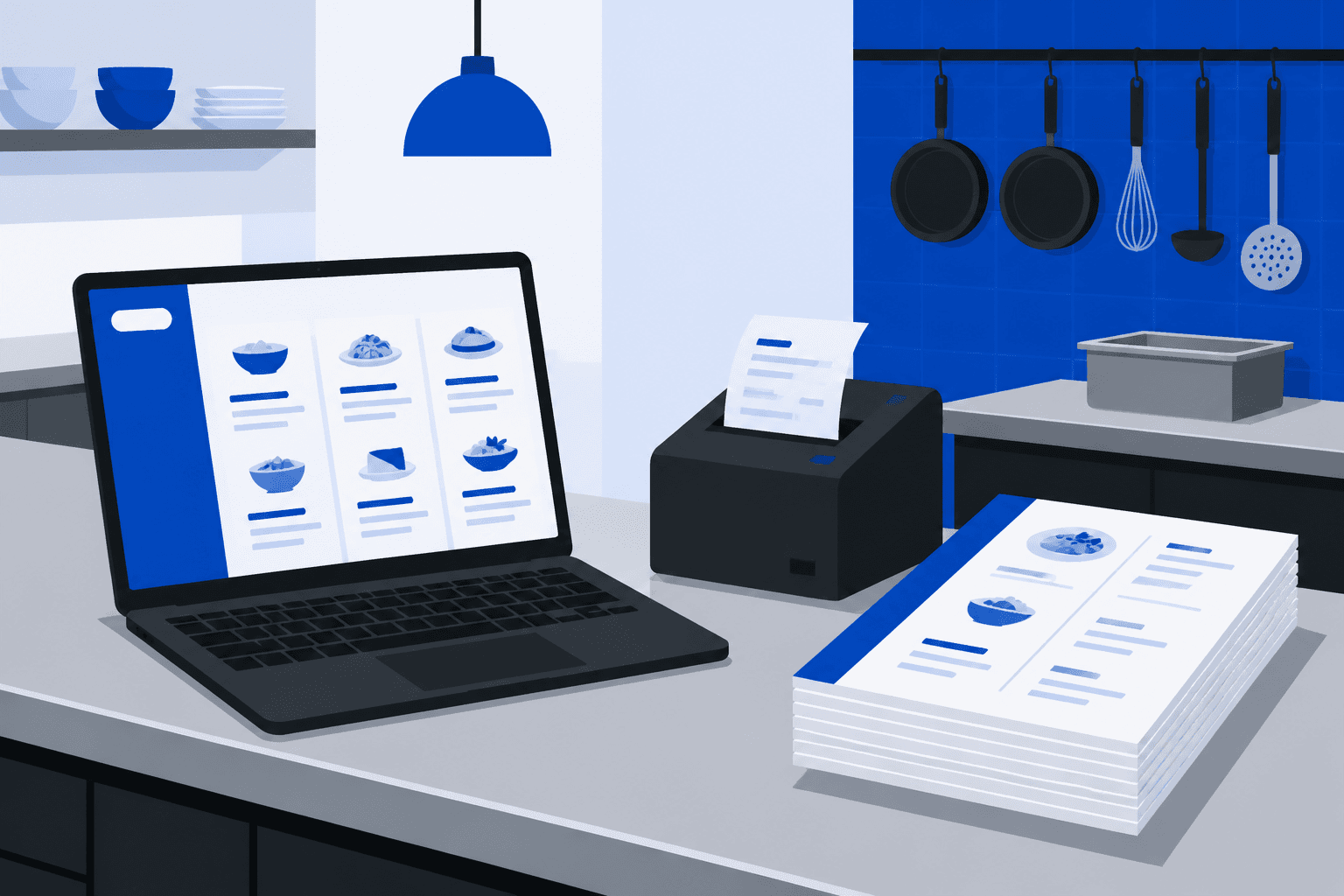
You have three names in front of you. All three portfolios look fine. All three sent a quote. Two of them have never built a site for a place that runs a dinner rush.
You can't tell that from a screenshot. A restaurant website looks like any other website in a portfolio grid — nice photo, menu, address. The difference shows up three weeks after launch, when you 86 the short rib and need the website to say so before the next order comes in. Or at 7:10 on a Friday when forty people are on their phones at once and your menu page takes nine seconds to load.
Here is what actually separates a designer who has worked with restaurants from one who hasn't, and the questions that surface it in a ten-minute call.
Your menu changes. Most websites assume nothing does.
A dentist's service list changes twice a year. Your menu changes when the fish doesn't come in, when your supplier raises beef prices, when you swap the seasonal special, when brunch starts. That's a weekly event, sometimes daily.
A designer who hasn't built for restaurants will hand you a beautiful menu page that is hard-coded — the prices are typed directly into the design. Changing one item means emailing them. If they're busy, your site says $18 while your counter says $21, and a customer argues with your cashier about it. That gap is worth closing on its own; we wrote about it in Your Online Menu and Your Printed Menu Disagree.
The worst version of this is the PDF menu. Someone uploads a scan of your printed menu and calls it done. It's unreadable on a phone, Google can't index the dish names, and updating it means asking the designer for a new file.
Ask: "If I 86 an item at 5pm, who changes the website and how long does it take?"
A good answer sounds like: "You do it. Here's the screen you'd use — it's two clicks, and it updates everywhere the item appears, including the ordering page." If they say "just email me and I'll get to it," ask what happens on a Saturday.
Ordering has to reach the kitchen, not an inbox
This is the single biggest tell. Someone who has only built brochure sites thinks online ordering means a form that emails you. That works until the second order arrives while you're expediting, and nobody is watching the inbox.
An order has to land somewhere a cook will see it under pressure. A printer by the pass. A tablet with a sound. Your POS, ideally — we go into why in Stop Retyping Online Orders Into Your POS. A designer who has lived through this will bring it up before you do. They'll ask what POS you run, whether you have a printer in the kitchen, and who handles the tablet on a slow Tuesday versus a packed Saturday.
They'll also ask about things a brochure builder never thinks about: pickup time slots, how far ahead someone can order, what happens when a customer orders a 40-person catering tray at 6:45pm, whether you want to pause ordering when the kitchen is buried.
Ask: "Walk me through what happens between a customer tapping Place Order and my cook seeing it."
A good answer sounds like: a specific chain of events with named hardware. A bad answer sounds like "you'll get a notification."
Photography is part of the job, not an afterthought
Food photos are the single biggest driver of what people order online, and most restaurant sites are running on phone snapshots taken under warm kitchen lights at the end of a shift.
A designer who works with restaurants will have an opinion about this before you ask. They'll tell you which eight dishes to shoot and which to leave off. They'll know that a half-eaten-looking plate kills an item and that a consistent angle across the menu matters more than any single hero shot. Some will shoot it themselves; some will hand you a shot list and a window seat. Either is fine. What matters is that they don't just say "send me whatever photos you have."
If you want to handle this part yourself, The Photos on Your Menu Are Costing You Orders covers what to shoot and how.
Ask: "What are you doing about photography?"
A good answer sounds like: "Send me your menu and I'll tell you the ten items worth shooting, then we either book a half day or I'll give you a setup you can do with a phone."
Peak-hour speed is a restaurant problem specifically
Most small-business websites get traffic spread flat across the week. Yours spikes. Thursday through Sunday, between 5:30 and 8, everyone who's thinking about you is on your site at the same time, on a phone, on patchy LTE, deciding between you and the place two doors down.
A heavy site — big uncompressed photos, four tracking scripts, a chat widget, an animated hero video — will cost you orders exactly then. The designer who hasn't built for restaurants doesn't weight that moment differently from a Tuesday afternoon.
Ask: "Pull up a restaurant site you built, on your phone, on data, right now. How fast does the menu load?"
That's not a gotcha. It's the test your customers run every night.
The ten-minute portfolio check you can run yourself
Forget the case study page. Take their three most recent restaurant clients and, on your own phone:
- Time how long the menu takes to appear.
- Try to place an order for pickup. Stop before payment.
- Look for a price that's obviously stale, or an item marked unavailable.
- Check whether hours are listed, and whether they match the Google listing.
- Search the restaurant name plus a signature dish. Does the site come up?
Then call one of those restaurants at 3pm, when they're not slammed, and ask the owner two things: does the designer answer, and can you change your own menu. Owners tell each other the truth.
When a general web designer is perfectly fine
Plenty of restaurants don't need a specialist, and paying for one is paying for capability you'll never use.
If you don't take online orders and don't plan to — a wine bar, a fine-dining room doing reservations only, a bakery where everything happens at the counter — a good generalist will build you something better than a mediocre specialist. If your menu is short and stable, hard-coded prices aren't a trap. If you already run ordering through a platform you like and just need a site that links to it, the hard part is already solved.
What you still need from a generalist is the ability to update text yourself, fast mobile pages, and someone who answers email. That's not restaurant-specific. Freelancer, Agency, or Template walks through which shape fits which business.
The specialist earns their fee when ordering, menu volatility, and the kitchen are all in play at once. That's where the mistakes are expensive and hard to undo.
Before you sign
Ask who owns the domain and the hosting account when the relationship ends. Ask what the monthly fee covers and what counts as an extra. Ask how menu changes are billed — hourly, included, or unlimited. Those three answers tell you more about the next two years than the design does; our seven questions to ask before you sign covers the rest.
And get the ordering flow in writing. Not "online ordering" as a line item — the actual path from the customer's thumb to your cook's hand, named device by named device. If a designer can write that paragraph without asking you what it should say, they've done this before.
If you want to see how we approach it, our restaurant work is laid out there in detail.